
“UK knowledge workers are losing more than 15 hours a week to admin: chasing files, hunting policies, and tracking down approvals across disconnected tools. Ricoh Europe’s December 2025 study of 6,000 UK office workers found that 31% of the average working week is spent on non-core admin – the highest figure in Europe (Ricoh Europe, December 2025). Asana’s 2024 Anatomy of Work Index found that knowledge workers spend 58% of every working day on ‘work about work’ coordination rather than skilled output (Asana, Anatomy of Work Index, 2024). For a 30-person British business at a fully loaded employer cost of £27 per hour (ONS ASHE 2025), the Ricoh figure alone translates to over £570,000 a year in lost staff time. The right internal site pays for itself in months. The wrong one becomes another tool nobody uses.”
This guide compares 7 intranet solutions suitable for UK SMEs of 30 to 500 staff looking for modern Digital Workplace Solutions UK organisation can adopt without enterprise-level complexity. The brief comes from real procurement conversations: “we are too small for an enterprise system, too disconnected for status-quo file shares, and too busy to spend a year configuring SharePoint.” The 7 products below address that brief in different ways. Each section names who the software fits, where it falls short, and what a typical UK rollout looks like.
Key Takeaways
- For UK SMEs of 30 to 100 staff, the strongest match varies by what you need. Claromentis wins when you need intranet plus business process automation plus learning management in one product. HUB Intranet wins on price for intranet-only rollouts. Simpplr wins on user experience for mid-market communications-led teams.
- Microsoft SharePoint is rarely the right answer for a small business without a dedicated SharePoint architect. The licence is cheap; the consultancy is not. UK SharePoint consultants charge £650 to £1,400 per day (NetMonkeys, SharePoint Cost Guide 2026).
- Year-one budgets for a 30-employee British business range from about £8,000 (Claromentis with all modules) to £25,000+ (SharePoint with consultancy). The cost difference between products is smaller than the cost of getting the wrong fit.
A few quick definitions before we go deeper
An intranet is the internal site where staff find company information: news, documents, the people directory, policies, and self-service forms. It is one component of a digital workplace.
Business process automation (BPA) is software that handles repeatable workflows like leave requests, expense approvals, and starters/movers/leavers tasks. It removes manual email forwarding and spreadsheet transcription.
A digital workplace is the integrated set of tools your staff use to communicate, find information, and complete business processes day-to-day through a single digital workplace platform. A modern digital workplace typically combines intranet, BPA, and learning management under a single login.
These three terms get used interchangeably in vendor marketing. The 7 products below differ in how much of the digital workplace they cover natively.
What makes a good intranet for a UK SME?
Five things separate a good fit from a bad fit at SME scale. Get all five right and the system will still be running in year three. Get any of them wrong and adoption collapses by month six.
Time-to-live measured in weeks, not quarters. A British SME does not have time for a 6-month SharePoint architecture project. The right product is configured and live in 6 to 8 weeks end-to-end. The wrong product takes 6 months to build and another 12 months for staff to actually use.
- Day-to-day administration by non-technical staff. In a 30-person business, the intranet admin is rarely a developer. It is an HR coordinator, marketing manager, or operations lead. If editing a page requires understanding hub sites, content types, or Modern Pages, the page does not get edited. The internal site rots.
- Predictable cost over 3 years. SharePoint’s license is cheap. The consultancy day rates are not. Cloud-hosted SaaS products typically cost more in the first year and less in year two and beyond. Year-three total cost of ownership matters more than initial license price.
Modular architecture. UK SMEs grow into automation and learning management over time. Software that bundles everything from day one charges for features you do not yet use. A modular product that lets you add components as you need them is more honest with your budget.
- UK or EU data residency. GDPR-conscious buyers, healthcare compliance, and ICO registration all push British businesses toward systems that host data in the UK or EU. Some otherwise excellent products host exclusively in the US, which is a procurement blocker for regulated sectors.

Which intranet platforms made this list?
In 2026, UK SMEs of 30 to 500 staff have around a dozen credible options. We narrowed to 7 products that genuinely fit the SME size band and serve UK or international markets with a UK-friendly model. Enterprise-only systems (Workplace from Meta, which is being phased out in 2026; Workvivo at the upper end of its pricing tier) and US-centric tools with no UK data residency option are out of scope.
Specifically, the 7 products compared below:
- Claromentis (UK-built, modular all-in-one)
- Microsoft SharePoint (Microsoft 365 add-on, DIY toolkit)
- HUB Intranet (UK-built, SME-focused, intranet-only)
- Simpplr (US-built, communications-led, mid-market)
- MyHub (cloud-hosted, small-business focus)
- Jostle (Canada-built, social-feel, smaller orgs)
- ThoughtFarmer (Canada-built, mid-market with strong onboarding)
Quick comparison table
The table below is a starting point, not a buying decision. The full reviews after the table go into who each option really fits.
| Platform | Best For | Year One Cost (30 Staff) | Time To Live | Modular | UK Data Residency |
|---|---|---|---|---|---|
| Claromentis | UK SMEs needing intranet + BPA + LMS in one product | from ~£8,000 | 6 to 8 weeks | Yes (Intranet base + optional BPA + optional LMS) | Yes |
| SharePoint | Microsoft 365 heavy users with a SharePoint admin on staff | £25,000 to £45,000 with consultancy | 5 to 6 weeks build + 6 to 18 months adoption | Modular via Microsoft 365 stack but DIY | Yes (UK / EU regions) |
| HUB Intranet | Budget-conscious British businesses needing intranet only | from ~£5,000 | 4 to 6 weeks | No (single product) | Yes |
| Simpplr | Communications-led teams of 200+ employees | £15,000+ | 6 to 8 weeks | Limited (intranet-only) | Yes (EU regions available) |
| MyHub | Smaller UK firms (10 to 50 staff) needing rapid setup | from ~£3,000 | 1 to 2 weeks (DIY) | No (single product) | EU available; check tier |
| Jostle | Smaller orgs wanting a social/community feel | from ~£4,000 | 2 to 4 weeks | No | EU available |
| ThoughtFarmer | Mid-market businesses (100 to 500 staff) prioritising onboarding | from ~£12,000 | 6 to 10 weeks | Limited | Multi-region |
Cost figures are indicative for a 30-employee British business at standard pricing tiers. Actual quotes depend on user count, modules, support level, and onboarding scope.

1. Claromentis
UK SMEs that need intranet + business process automation + learning management in one product, with implementation by a UK-based partner.
According to the GetApp 2026 Comparison, Claromentis is “an integrated, highly customisable digital workplace featuring Intranet, Business Process Automation and Learning Management System packages”. For a British SME without a dedicated platform engineer, that integration is the value proposition.
What works well:
The software ships configured. Out of the box you get a people directory, news, document management, a knowledge base, an AI-powered policy manager, AI search, drag-and-drop page builder, and a visual menu builder. In our experience rolling out Claromentis for UK SMEs in the 30 to 100 staff range, total first-year cost typically lands around £8,000 to £25,000 all-in depending on user count and module mix, including mobile apps and onboarding.
That figure drops meaningfully in year two when one-time fees do not repeat. The structural reason: cloud installation and onboarding are billed once, not annually, so year-two cost is typically 30 to 40% lower than year one.
Where it falls short:
The interface is more functional than beautiful. By contrast, Simpplr’s visual design feels more polished, more “consumer-grade product” than “B2B intranet from 2018 updated for 2026”. For communications-led teams that prioritise polish over feature breadth, Simpplr or Workvivo may feel slicker. Claromentis is a workhorse, not a showpiece.
Typical UK rollout:
6 to 8 weeks end-to-end. Discovery and configuration in weeks 1 to 2, content and branding in weeks 3 to 4, workflow and LMS configuration in weeks 5 to 6, testing and go-live in weeks 7 to 8. Mobile apps for iOS and Android are available as optional add-ons.
Cost structure (30-employee UK SME): £8,000 to £25,000 in the first year depending on module mix (Intranet only at the low end, Intranet + BPA + LMS + mobile apps at the high end). Year two drops by roughly 30 to 40% because cloud installation and structured onboarding are billed once, not annually. Modular: customers can choose Intranet only, Intranet + BPA, Intranet + LMS, or all three.
Verdict:
The right answer for British businesses that want one product replacing 3 to 5 disconnected tools and have decided that an integrated digital workplace beats a stitched-together best-of-breed stack. Strongest match when you need workflow automation or compliance training alongside the intranet.
2. Microsoft SharePoint
Organisations already deeply invested in Microsoft 365 with an in-house SharePoint architect or Power Platform team.
SharePoint is Microsoft’s document management and site-building toolkit, , often compared with a SharePoint Alternative for Business that requires less specialist administration. sold as part of Microsoft 365. It is a foundation you build an intranet from, not a finished intranet. As an AIIM survey cited by SharePoint Support, 2026 found, “nearly 50% of SharePoint-enabled enterprises rate ‘lack of expertise’ as their top ongoing issue”. The technology works. Adoption is the problem.
What works well:
Tight integration with the rest of Microsoft 365 (OneDrive, Teams, Outlook). Native single sign-on. Power Automate workflow capability for organisations that have a Power Platform team. Predictable Microsoft data residency for GDPR-conscious buyers. If you already have a SharePoint architect on staff and a heavy M365 commitment, SharePoint is the right answer.
Where it falls short:
For UK SMEs without a SharePoint admin, the software is a project, not a product. UK SharePoint consultants charge £650 to £1,400 per day (NetMonkeys, 2026). A typical SME implementation runs £5,000 to £25,000 before staff training, plus £800 to £3,500 per month in managed support. Ongoing changes (new workflows, page redesigns, navigation updates) typically trigger consultant invoices.
Typical UK rollout:
5 to 6 weeks for a template-based build, then 6 months to 2 years for staff to use it confidently. The build is fast. Adoption is not.
Cost structure (30-employee UK SME on Business Standard with consultancy): Roughly £25,000 to £45,000 in the first year (Microsoft 365 licences plus implementation plus managed support). Year two is similar because consultancy and managed support continue.
Verdict: SharePoint makes sense for a 500+ employee organisation with a dedicated SharePoint architect, deep Microsoft 365 commitment, and the budget for ongoing consultancy. For a 30 to 100-staff UK SME without those resources, the total cost of ownership is significantly higher than the licence price suggests. For a fuller comparison, see Claromentis vs SharePoint for UK SMEs.
3. HUB Intranet
Budget-conscious British SMEs that need a clean internal site without business process automation or LMS bolted on.
HUB Intranet is a UK-built product positioned explicitly for SMEs. According to HUB Intranet’s published positioning, 2026, the system is “designed for SMEs, offering an all-in-one feature package at a budget-friendly price with no hidden costs”. UK ownership means UK data residency and UK-business-hours support without negotiation.
What works well: Transparent pricing model. Strong feature set covering news, documents, people directory, and policy management. UK-based development and support. Clean, modern interface. Faster initial setup than the all-in-one alternatives because the scope is narrower.
Where it falls short: Single-product focus. Specifically, if you need workflow automation or learning management, you need separate tools (Microsoft Power Automate plus a separate LMS like Cornerstone or LearnUpon). Three vendor relationships, three admin panels, three support tickets when something breaks. For UK SMEs who genuinely only need an intranet, this is fine. For those who realise mid-rollout they also want automation and training, switching cost is real.
Typical UK rollout: 4 to 6 weeks end-to-end. Faster than the all-in-one alternatives because there is no BPA or LMS configuration phase.
Cost structure (30-employee UK SME): Around £5,000 to £8,000 in the first year for the intranet alone. Add £3,000 to £8,000 per year if a separate LMS is needed. Add Microsoft Power Automate licensing or equivalent for automation.
Verdict: Strong fit for UK SMEs whose pain point is “we cannot find documents or company news” and not “we have manual approval workflows everywhere”. On the other hand, if you need automation or training management, the all-in-one alternatives (Claromentis especially) work out cheaper over 3 years because you are not paying 3 vendors.
4. Simpplr
Communications-led mid-market companies (200+ employees) that prioritise user experience and engagement.
Simpplr is a US-built modern intranet product with a strong communications focus. It rates 4.5/5 on G2 from over 300 reviews and is consistently scored highly for ease of use (around 9.4 out of 10) and quality of support (around 9.3). The product is genuinely beautiful in a way most B2B intranets are not.
What works well:
Best-in-class user experience. Modern visual design that staff actually want to use. Strong native engagement features (recognition, polls, surveys). AI-powered content recommendations. Integration ecosystem with Slack, Microsoft 365, and Workday.
Where it falls short:
Pricing is mid-market and up. Not ideal for under 100 staff. Limited business process automation capability compared to all-in-one alternatives. No native LMS. US-headquartered, which may matter for British GDPR-conscious buyers although EU data residency is available on request. Initial setup is faster than SharePoint but slower than HUB Intranet because the configuration scope is broader.
Typical UK rollout:
6 to 8 weeks. Strongest fit when communications is the primary driver, not workflow automation.
Cost structure (30-employee UK SME):
Likely £15,000+ in the first year. Simpplr typically does not publish per-user pricing but mid-market reviews on Capterra and Software Advice indicate per-employee pricing meaningfully above the SME-focused alternatives.
Verdict:
Even so, if your business is 200+ staff, communications-led, and you have budget for a premium product, Simpplr is the strongest UX in the category. For UK SMEs of 30 to 100 staff, the per-employee pricing puts it at the upper end of the budget range, and the lack of integrated BPA and LMS means you need additional tools.
5. MyHub
Smaller British SMEs (10 to 50 staff) needing rapid DIY setup and the lowest possible learning curve.
MyHub is a cloud-hosted system specifically designed for small business. The MyHub product page, 2026 says “the beautifully-designed interface is developed by experts for non-experts, making the software fun to use and easy to set up”. A free 14-day trial is available, which is unusual in this category and useful for procurement validation.
What works well:
Lowest barrier to entry of any product on this list. Self-service signup, free trial, no implementation consultant required. Drag-and-drop page builder genuinely usable by non-technical staff. Good fit for businesses where one person is wearing the IT hat alongside three other jobs.
Where it falls short:
Limited customisation depth compared to Claromentis or SharePoint. No business process automation. No LMS. As businesses grow past 50 staff, they typically outgrow MyHub’s feature set within 18 months. Switching cost from MyHub to a more capable system is real.
Typical UK rollout:
1 to 2 weeks DIY. No consultant required for basic setup, although MyHub does offer paid implementation if needed.
Cost structure (30-employee UK SME):
Around £3,000 to £5,000 per year. Per-employee pricing scales with company size.
Verdict:
The right answer for very small British firms (10 to 30 staff) that want a working intranet by next month and do not need automation or training management. For businesses growing past 50 employees or expecting to add BPA or LMS in the next 12 months, the all-in-one alternatives are more future-proof.
6. Jostle
Smaller organisations (10 to 100 staff) wanting a social, community-feel internal site rather than a document-heavy one.
Jostle is a Canada-based cloud product that explicitly leans into social features. According to Jostle’s product positioning, 2026, the software is built for “smaller organizations or those not expecting to grow, who need to quickly set up an intranet”. Reviews on G2 and Capterra describe it as creating “a warm and familiar workspace with simple content sharing and access that adds a social media-like flavour to the working environment”.
What works well:
Fastest “feels like a community” experience of any system on this list. Strong news and shout-outs functionality. Good for businesses where the primary use case is “we need our staff to feel connected”, not “we need to find documents”. Mobile-friendly. Available in EU data centres.
Where it falls short:
Document management is lighter than Claromentis or SharePoint. No business process automation. No native LMS. Less suitable as a single source of truth for policies, governance, or compliance documentation. The “social media-like flavour” is a feature for some businesses and a distraction for others.
Typical UK rollout:
2 to 4 weeks. Self-service setup is genuinely possible for small teams.
Cost structure (30-employee UK SME):
Around £4,000 to £7,000 per year on standard tiers.
Verdict:
Strong choice for distributed teams or culture-led businesses where engagement and social interaction are the primary drivers. Less suitable for compliance-driven businesses that need audit trails and governance built in.
7. ThoughtFarmer
Mid-market businesses (100 to 500 staff) prioritising onboarding and knowledge management.
ThoughtFarmer is a Canada-based intranet product with strong reviews on G2 and Capterra. Customers consistently praise the platform’s onboarding experience and admin interface. Implementation guidance and customer support are repeatedly highlighted as differentiators.
What works well:
Genuinely strong onboarding workflows for new hires. Solid knowledge management features. Good middle ground between Simpplr (communications-led, premium UX) and Claromentis (functional all-in-one). Multi-region data hosting.
Where it falls short:
Pricing sits above the SME budget for sub-100-staff organisations. Limited native business process automation. No integrated LMS. Better fit for the upper end of the SME range than the smaller end.
Typical UK rollout:
6 to 10 weeks. Slightly longer than the other mid-market alternatives because configuration depth is greater.
Cost structure (30-employee UK SME):
Likely £12,000 to £20,000 per year. Stronger fit at 100+ staff where the per-employee pricing tier is more competitive.
Verdict:
Solid mid-market choice when onboarding is the primary use case. For smaller British businesses, the price-to-fit ratio favours Claromentis or HUB Intranet. For mid-market firms (100 to 500 staff), ThoughtFarmer is genuinely competitive.
How do you choose the right intranet for your UK SME?
The 7 products above sort cleanly along three axes: scope (single product vs all-in-one), scale (small SME vs mid-market), and admin model (DIY vs partner-led). The decision matrix below maps the most common British SME procurement scenarios to the system that typically fits best.
| Scenario | Strongest Match | Why |
|---|---|---|
| 10 to 30 staff, intranet only, want it live in 2 weeks | MyHub or Jostle | Self-service setup, low total cost, fastest go-live |
| 30 to 100 staff, intranet only, UK-based | HUB Intranet | UK ownership, transparent pricing, narrower scope means faster rollout |
| 30 to 100 staff, intranet + automation + training | Claromentis | All-in-one product, modular pricing, UK partner support |
| 100 to 500 staff, communications-led with budget | Simpplr | Strongest UX, engagement features, premium tier |
| 100 to 500 staff, onboarding-led | ThoughtFarmer | Strong onboarding workflows, mid-market pricing |
| 500+ employees with SharePoint architect on staff | Microsoft SharePoint | Maximises existing M365 investment, customisable to enterprise needs |
| Compliance-heavy (CQC, ISO, GDPR) | Claromentis | Native LMS for compliance training, audit trail features |
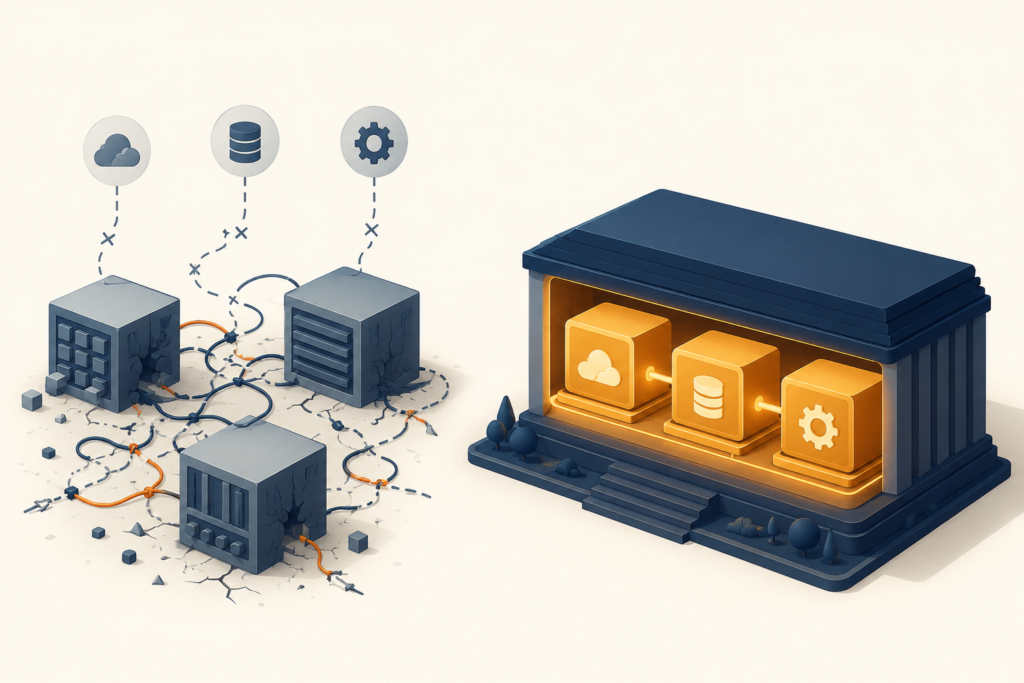
In practice, the pattern we observe across UK SME procurement is that businesses underestimate two costs when choosing an intranet: the cost of integrating a single-product system with separate BPA and LMS tools (which typically adds 30 to 40% to year-three TCO) and the cost of slow adoption when the software is too complex for a non-technical admin to run day-to-day.
What are the most common UK SME intranet procurement mistakes?
Three patterns repeat in British SME intranet selection that cost businesses time, money, or both. Avoiding these is more valuable than picking the perfect product.
Mistake 1: Buying SharePoint because it is “free with Microsoft 365”.
SharePoint Online is included in Microsoft 365 Business Standard. The licence is genuinely cheap. The cost is not the licence. UK SharePoint consultants charge £650 to £1,400 per day, and a typical SME implementation runs £5,000 to £25,000 before staff training, plus ongoing managed support of £800 to £3,500 per month. The first year’s total is typically £25,000 to £45,000 for a 30-employee SME. Put another way: the licence is the cheapest part of SharePoint.
Mistake 2: Choosing the system based on the homepage demo, not the daily user.
Every intranet product demos beautifully. The decision should be: can our HR coordinator publish a news post in 5 minutes without booking a meeting with IT? Can our operations lead build a leave-request workflow in an afternoon? Worth noting: a 30-minute “real user” test where someone non-technical tries to do the actual jobs the intranet is meant to support tells you more than any sales pitch.
Mistake 3: Buying for today’s staff count, not 3-year projection.
UK SMEs grow. A 30-person business that picks a system with a hard ceiling at 50 staff is making a 12 to 18-month problem. A 30-person business that picks a product comfortable at 500 staff is paying slightly more today for software that will not need replacing in 2027. Pick the system that comfortably handles 3x your current headcount.
How can a UK SME trial these platforms before committing?
Each of the 7 products above offers some form of trial, but the trial experience varies enormously. The best way to evaluate a system is not a 60-minute sales demo. The upshot is this: you want a 30-day hands-on environment populated with realistic content where your actual team can attempt the actual jobs you need the intranet to do.
For Claromentis specifically, Techspire IT, a Claromentis Partner UK, offers a free 30-day demo playground. We set up a private Claromentis environment with sample intranet content, a working business process automation flow, and the LMS module activated. No credit card. No sales pressure. Your team gets 30 days of full access to evaluate against the procurement scenarios above.